4.9 Stars | 270+ Reviews
4.9 Stars | 270+ Reviews
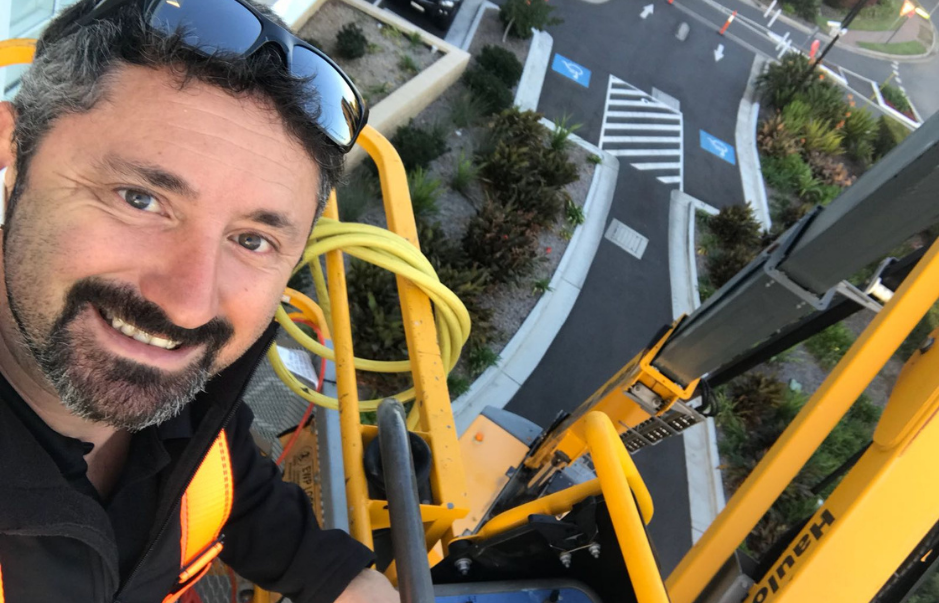
A ground-floor storefront and a twelve-storey tower do not clean the same way. High rise vs low rise window cleaning differs in equipment, certification and job duration.
This article sets out where that difference actually sits. It covers the height threshold that changes the method and the certification each approach requires. It also covers how safety obligations shift once a building moves into high-rise territory.
Sydney has no single rule that marks the exact point a building becomes high-rise for cleaning purposes. The more useful line sits with access, not storey count alone. Water fed pole systems clean windows and facades up to seven storeys from the ground. They deliver purified water through a telescopic pole, with no ladders or scaffolding needed. Below that height, technicians can usually clean this way.
A traditional squeegee and mop from a ladder also works fine. Neither approach needs fixed infrastructure or specialist height certification. Once a building sits beyond safe ground-based reach, cleaning depends on infrastructure already installed. Otherwise, it depends on equipment brought to site for the job. This is the point where a Building Maintenance Unit, rope access or an elevated work platform becomes the practical option. Certification, safety documentation and scheduling all change from that point.
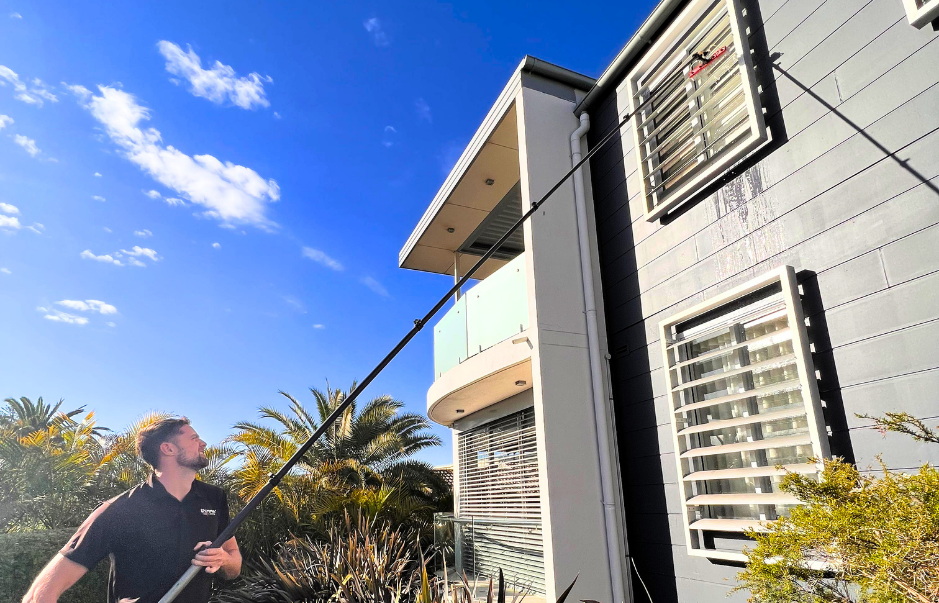
Technicians typically clean ground-accessible buildings using one of two methods. The traditional approach uses a mop and squeegee, worked in overlapping strokes for a streak-free finish. This technique still requires skill, since window cleaning is a specialised trade rather than a simple task. For taller ground-floor and low-rise buildings, a water fed pole system extends reach up to seven storeys.
Telescopic poles deliver purified water directly to the glass, removing the need for ladders or scaffolding. The purified water cleans without leaving streaks or mineral deposits, and the technician works from the ground the entire time. This reduces fall risk considerably compared with ladder work at height. Shimmer assesses each site’s glass condition and access before recommending either method.
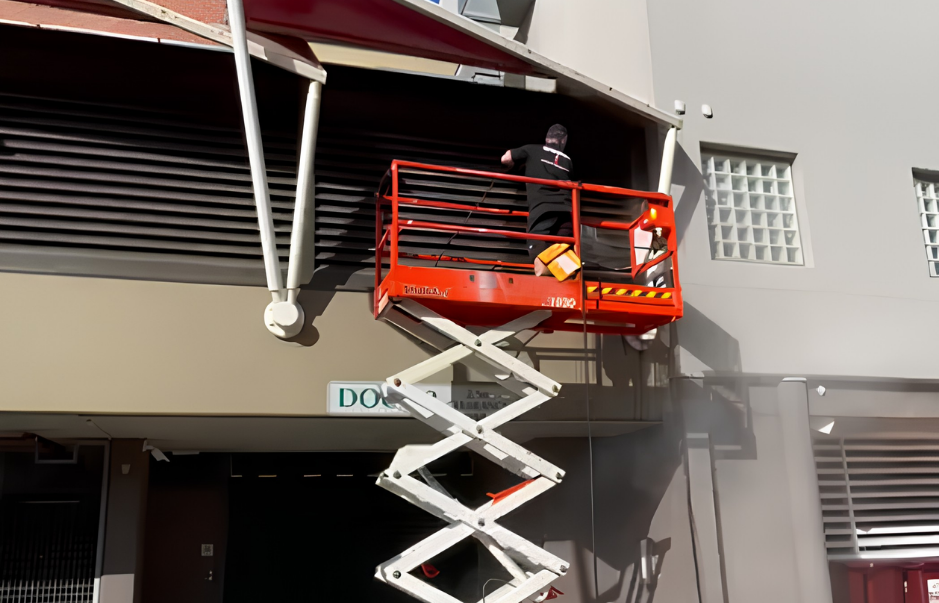
Buildings beyond safe ground-based reach need a fixed system or specialist equipment brought to site. Elevated work platforms, or EWPs, use scissor lifts and boom lifts to reach a wide range of heights and angles. Certified operators assess height, reach and ground conditions before selecting the right platform for the job. Where a building already has a Building Maintenance Unit installed, that system becomes the primary method.
A BMU includes a jib arm, cradle and powered hoist that travels along a track fixed to the roof. It gives technicians a stable platform without external scaffolding or rope rigging for each clean. Where no BMU exists, IRATA certified technicians use rope access instead. They work from a main line and an independent safety line, each anchored separately to the building. Rope access reaches almost any exterior point, including setbacks and recessed balconies a BMU can miss.
Related reading: BMU and rope access both suit high-rise buildings, and many towers combine the two. See our full BMU vs rope access comparison for the trade-offs that matter for your building.
Many Sydney high-rises combine methods. A BMU covers the main facade, and rope access covers the sections it cannot reach.
Low-rise, ground-based work carries lighter formal requirements, though technicians still follow safe practices on every job. High-rise window cleaning operates under the Work Health and Safety Act 2011 in New South Wales. A current Safe Work Method Statement is required before work begins on any high-rise access method. It must reference the specific building by name.
Rope access technicians must hold current IRATA certification, and some buildings also require police checks. BMU systems must carry current compliance certificates under AS 1418.13, which is the building owner’s responsibility to maintain. Anchor points and davit arms need the same certification before any technician clips in. Lapsed certification stops work until it is renewed, regardless of the deadline on the job.
Important: ask any high-rise contractor to confirm current IRATA certification. Also confirm a building-specific Safe Work Method Statement is in place before work begins. Certification lapses are the most common reason a scheduled clean gets delayed.
Low-rise cleaning is generally quicker to schedule and carries a lower labour cost per visit. Water fed pole work causes minimal disruption, since the technician works entirely from the ground. High-rise work needs more lead time, particularly for BMU and rope access jobs. Both methods are weather-dependent, and rope access typically pauses sooner in wind and storms than a BMU. Scheduling also involves notice to residents or tenants, since BMU and rope access work is visible from inside the building. BMU access carries a higher upfront capital cost, since the system relies on infrastructure already fitted to the building. Rope access has a lower capital cost but a higher per-session labour cost, since technicians rig for each visit. Facade condition, weather exposure and building height all affect how often a building needs attention, low-rise or high. Coastal-facing towers typically need more frequent cleaning than a comparable inland building, regardless of access method.
The right method depends on the building, not on a preference for one system over another. Start with height and facade design, since these decide whether ground-based methods can reach every window. Check whether the building already has a BMU installed, since retrofitting one to an existing building is costly. Factor in cleaning frequency next, since a system built for quarterly visits suits a different budget than an annual clean. A facade assessment is the most reliable way to confirm which method, or combination, fits a specific building. Shimmer assesses every high-rise and low-rise site individually before recommending an access method. It does not default to one approach across every job.
Read our guide to high-rise window cleaning in Sydney for a broader look at these methods.
“The building decides the method, not the height number on a spec sheet.”
Shimmer works across BMU, rope access, EWP and water fed pole methods for buildings of every height across Sydney.
Get a Free Quote Or call us: 1300 090 914Shimmer provides ISO-certified window cleaning for Sydney’s commercial and strata buildings, with documentation ready before you ask for it.
Get a Free Quote Or call us: 1300 090 914
Tired of streaky windows? Discover the professional method for streak-free windows every time — from the right tools to the technique the experts use in Sydney.
Read More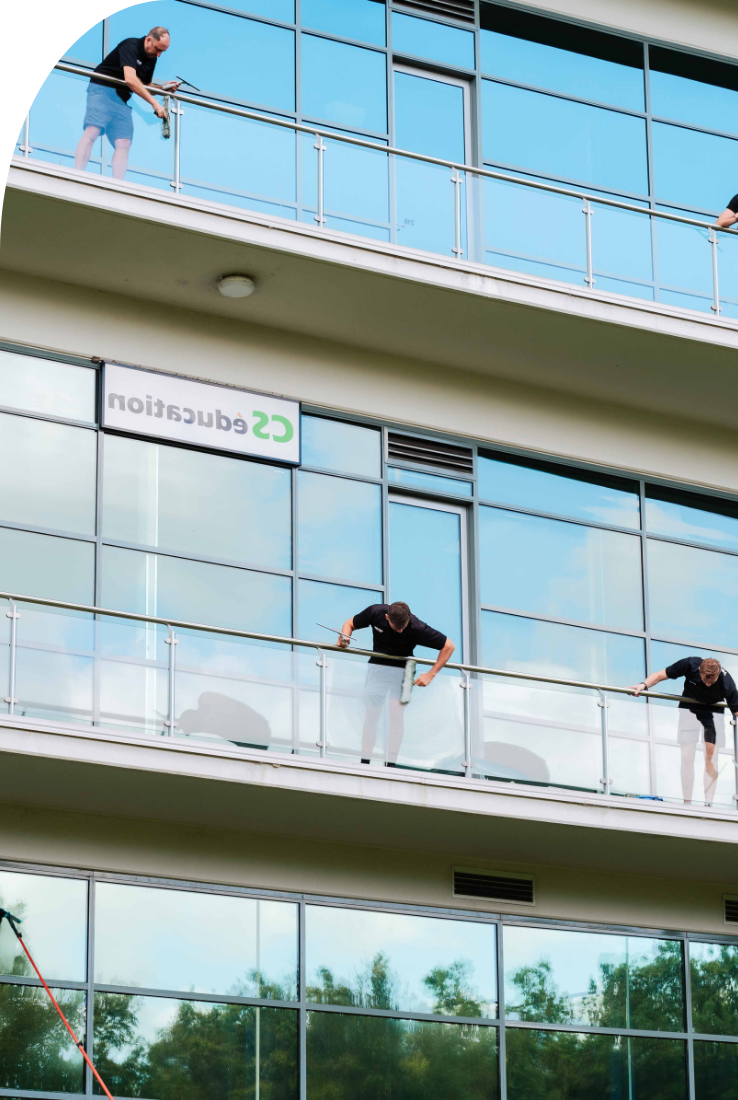
Everything you need to know about cleaning windows at home: the right tools, best solutions, how often to clean, which surfaces need special care, and the clear signs it's time to call a professional window cleaner in Sydney.
Read More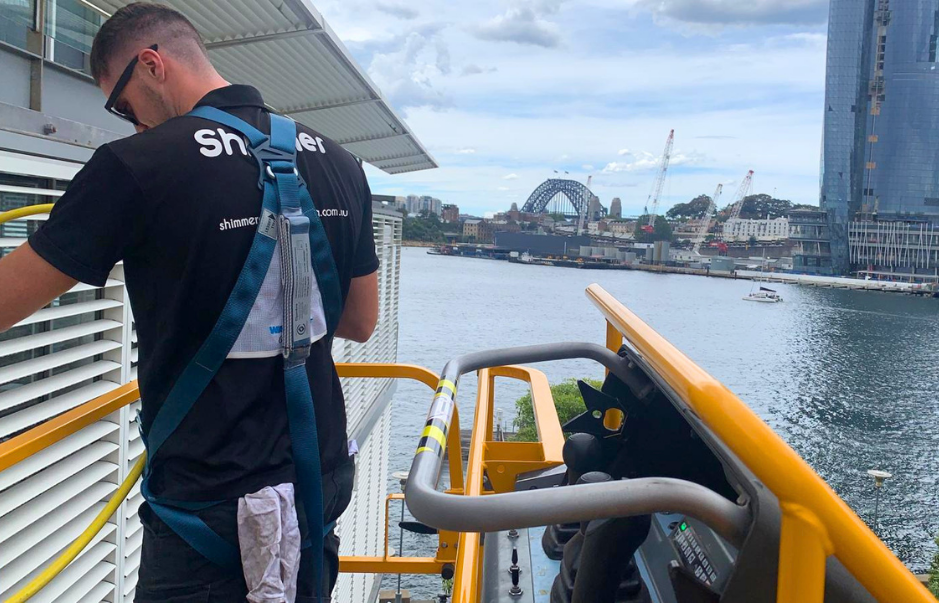
Learning how to clean exterior windows properly means choosing the right tools, technique and cleaning solution for your surface type — and knowing which shortcuts cause permanent damage.
Read Morecontact Shimmer today
Guaranteed reliable and professional window and glass cleaning service
Experience
Free
Guaranteed
Guaranteed