4.9 Stars | 270+ Reviews
4.9 Stars | 270+ Reviews
A facade that looks immaculate from the street can fall behind fast if the cleaning schedule is wrong. A high rise window cleaning schedule Sydney buildings rely on is set by the building itself, not an industry default.
This guide walks through what actually changes a high-rise cleaning schedule. It covers building type, weather, facade material and access method. By the end you should be able to set a realistic frequency for your own building. You will also know the right questions to ask a contractor about theirs.
Office towers with a busy street-level lobby often need a tighter schedule than a quiet residential tower. Commercial buildings clean the facade to protect the image tenants and visitors see every day. Many CBD towers land on a quarterly cycle for this reason. Residential high-rises can often stretch further, sometimes to twice a year, depending on exposure and body corporate budgets. Mixed-use buildings usually sit somewhere between the two, since they carry both a public frontage and private balconies.
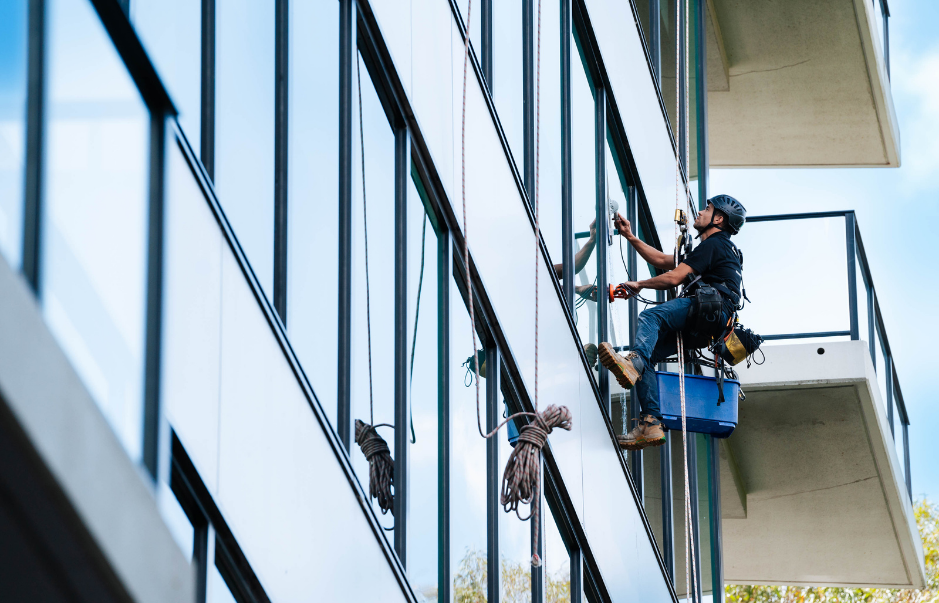
A Building Maintenance Unit gives a building permanent access, which makes frequent cleaning more cost-effective over time. Buildings relying on rope access or an elevated work platform need each clean booked and coordinated as its own job. This often means frequency gets set around budget cycles rather than a fixed monthly plan. Neither approach is wrong. The right one depends on what access the building already has.
Tip from the professionals: a detailed service report says more about a company’s approach than a sales pitch. It also gives a facility manager something concrete to pass up to head office or an owners corporation.
For more detail, see our guides to BMU, rope access, EWP and water fed pole cleaning. Each page covers its method in more depth than fits here.
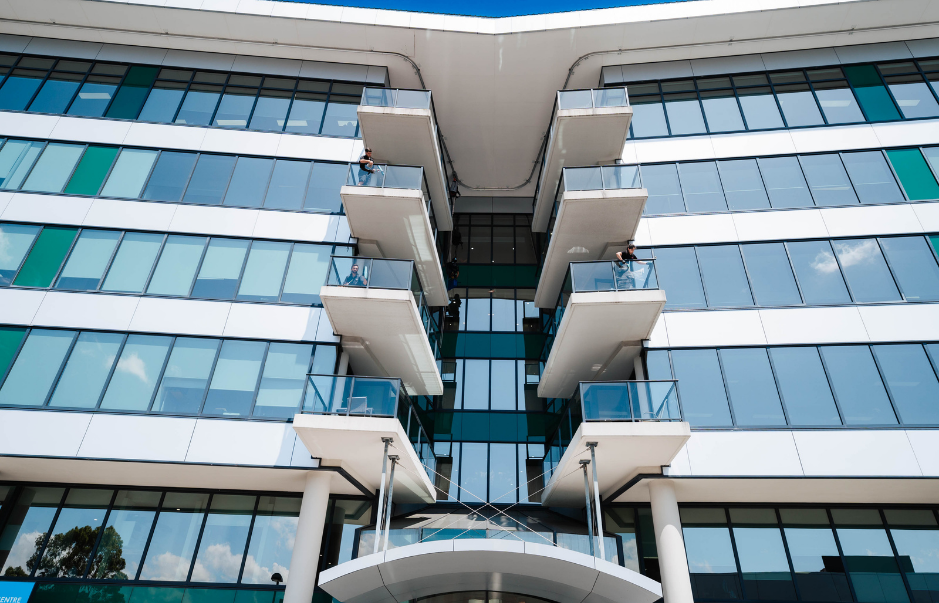
Location has a direct effect on how quickly a facade loses its finish. Coastal towers exposed to sea spray collect salt residue faster than buildings further inland. Salt etches glass if it sits too long. CBD buildings pick up traffic pollution and construction dust from nearby sites, which can build a visible film within weeks. Bushfire smoke during summer is another seasonal factor Sydney buildings need to plan around. Soot settles on facades and stays there until it is professionally removed.
Rain does not solve the problem on its own. It often leaves mineral deposits and watermarks rather than washing a facade clean. Water fed pole cleaning uses purified water specifically to avoid this. This matters more in hard water areas or after a run of storms.
Facade material changes how visible dirt becomes, and how often it needs attention. Glass curtain wall facades show streaking and dust more clearly than rendered or metal panel exteriors. There is simply more reflective surface to mark. Textured or patterned facades trap grime in a way flat glass does not. This can call for closer attention in specific areas rather than one blanket schedule.
Mixed material facades are increasingly common on newer Sydney high-rises. These often need the glass sections cleaned more often than the surrounding cladding. An elevated work platform suits this kind of variation well. It adapts to different building structures and angles within the same job.
| Building or Facade Type | Typical Frequency | Why |
|---|---|---|
| Commercial CBD tower, glass curtain wall | Quarterly | High visibility, tenant image, pollution build-up |
| Residential high-rise, mixed facade | Twice yearly | Lower public exposure, body corporate budget cycles |
| Coastal high-rise | Quarterly or shorter | Salt spray accelerates residue build-up |
| Building with a BMU installed | Monthly to quarterly | Permanent access lowers the per-clean cost |
| Building using rope access or EWP only | Twice yearly to quarterly | Each clean needs a discrete booking and setup |
This table is a general guide, not a fixed rule. Every facade earns its own assessment.
Every high-rise cleaning job in NSW sits within the Work Health and Safety Act 2011. This applies no matter how often the job happens. A current Safe Work Method Statement is required before any session starts. It should reference the specific building by name. Rope access technicians need current IRATA certification, and BMU or EWP operators need certified training for that equipment. Shimmer holds triple ISO certification across quality, safety and environmental management, covering every access method used on a job.
Responsibility for the schedule is shared. A building’s permanent access infrastructure, including any BMU or anchor points, is the owner’s responsibility to maintain and certify. The cleaning contractor is responsible for technician qualifications, equipment and on-site safety documentation for each visit. Getting this split clear upfront avoids disputes later about who signs off on what.
Important: for further detail, refer to SafeWork NSW’s working at heights guidance.
“The right schedule is decided by the building, not by habit or convenience.”
A tower with a busy public frontage and frequent public exposure usually justifies a tighter cycle. A quieter residential building with a simpler facade can often run on a longer one. The most reliable way to land on the right number is a proper site assessment. This covers access options, facade material and location exposure before recommending a frequency.
Getting the schedule wrong costs more than it saves. A facade left too long between cleans needs more time and sometimes stronger methods to bring it back. This often costs more than sticking to a shorter, regular cycle. Tenants and visitors also notice a neglected facade well before facility managers do. That first impression is hard to undo once it forms.
A written schedule also helps facility managers plan budgets and communicate with owners corporations or head office. Setting the frequency once, in writing, avoids the schedule drifting based on whoever raised it last. It also gives a clear baseline to review later. A new tenant fit-out or an added balcony enclosure is a good trigger to revisit it.
Related reading: see our high-rise window cleaning guide for a broader look at Sydney building thresholds. It sets out how access methods get chosen at scale, and how this schedule fits within that bigger picture.
Shimmer works across BMU, rope access, EWP and water fed pole methods for high-rise buildings throughout Sydney.
Get a Free Quote Or call us: 1300 090 914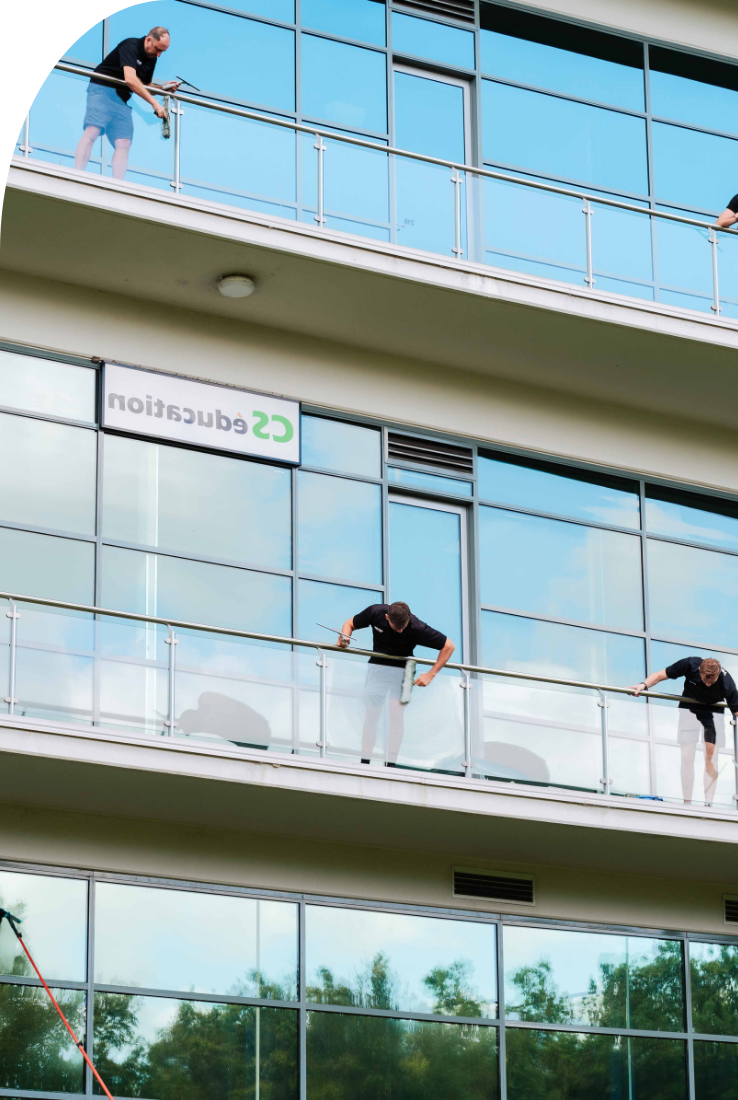
Everything you need to know about cleaning windows at home: the right tools, best solutions, how often to clean, which surfaces need special care, and the clear signs it's time to call a professional window cleaner in Sydney.
Read More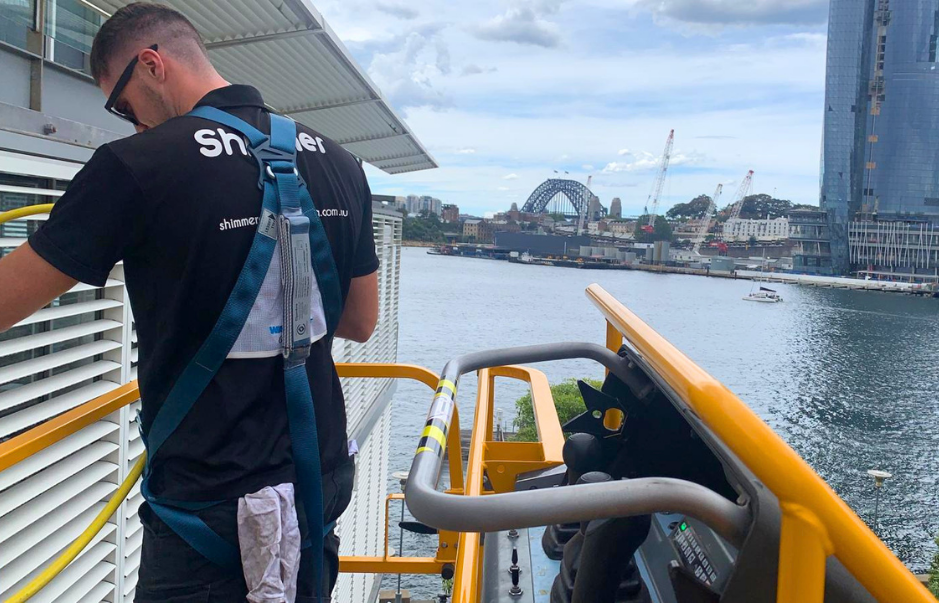
Learning how to clean exterior windows properly means choosing the right tools, technique and cleaning solution for your surface type — and knowing which shortcuts cause permanent damage.
Read More
Struggling with dirty exterior windows? This step-by-step guide covers the tools, technique and timing to clean outside windows properly — plus when to call in the professionals.
Read Morecontact Shimmer today
Guaranteed reliable and professional window and glass cleaning service
Experience
Free
Guaranteed
Guaranteed