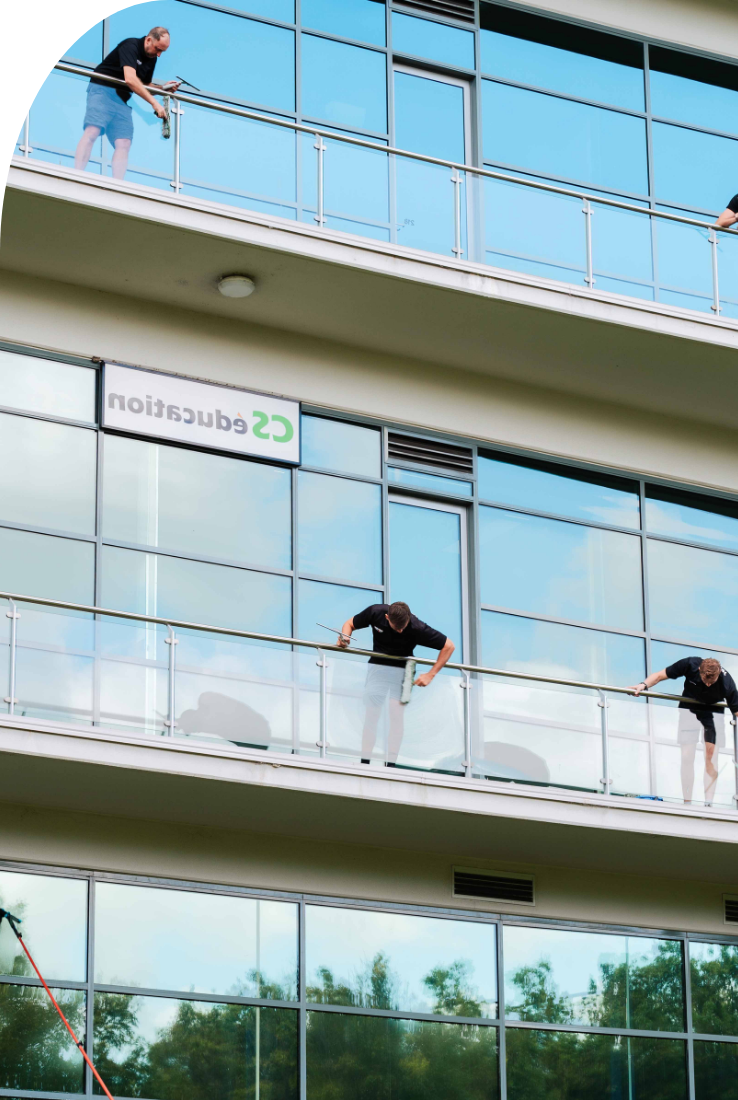

Why Does Summer Heat Make High-Rise Window Cleaning Harder and More Expensive?
Most facilities managers think of summer as peak cleaning season. The reality for high-rise buildings is the opposite. Once December and January arrive, scheduling a full facade clean on a Sydney CBD tower becomes significantly more difficult and, in some cases, less effective.
Here is why summer creates problems specific to high-rise cleaning:
- Solution streaking on sun-facing glass: On days above 30°C, cleaning solutions evaporate faster than technicians can work across large glazed surfaces. North and west-facing elevations are the worst offenders. The result is streaking and residue that requires a second pass.
- Compressed working hours: Rope access operations on Sydney high-rises are limited to certain wind speed thresholds. Summer afternoon thunderstorms and sea breezes regularly blow in from mid-afternoon, cutting usable working hours short and stretching multi-day jobs into multi-week projects.
- Baked-in contamination: Winter grime, spring pollen, and salt residue that was not cleared before summer heat is now chemically bonded to the glass. Standard cleaning will not lift it. It requires acid treatments or mechanical intervention — both of which cost more and carry greater risk to glass integrity.
- Booked-out slots: Every other strata manager and facilities team has the same idea. Q4 is the most competitive booking period for commercial cleaning contractors in Sydney. Premium scheduling, consistent technician teams, and preferred time windows are all gone by early November.
Worth knowing: Hard water mineral deposits and salt residue that sit through a Sydney summer can permanently etch into glass within a single season. Once etched, the glass requires replacement, not cleaning. A spring program costs a fraction of a single glazing panel replacement on a high-rise building.
What Makes Spring the Ideal Season for High-Rise Access Work in Sydney?
High-rise window cleaning is not simply window cleaning done at height. It is a logistics and safety operation that is acutely sensitive to environmental conditions. Spring in Sydney consistently delivers the conditions that make this work most efficient.
Wind conditions
Sydney’s spring months bring more stable daytime wind patterns than either winter (cold fronts from the south) or summer (afternoon sea breezes and storm activity). Rope access work has strict operational wind speed limits. More stable conditions mean more productive days per booking and fewer reschedules.
Temperature and drying time
The 18 to 24°C range that Sydney’s October and early November typically deliver is the sweet spot for professional cleaning solutions. The product has time to dwell and lift contaminants before it begins to dry. Above 30°C, this window shrinks rapidly on large glass surfaces.
Post-winter, pre-summer timing
A spring clean addresses both the winter buildup (salt, mould, watermarks, exhaust) AND the spring contamination (pollen, westerly dust) in a single service. The building then enters summer in the best possible condition, requiring only a maintenance clean rather than a remediation clean at the end of the season.
Shimmer Glass manages all primary access methods for Sydney high-rise buildings. See the full breakdown on the access methods page to understand which approach suits your building’s design.
Which Access Method Does Your Building Require and Why Does It Affect Booking Lead Time?
One of the most common misconceptions facilities managers have about high-rise cleaning is that it is a single-method trade. It is not. The access method used directly determines scheduling complexity, crew size, equipment requirements, and the lead time needed to organise each job properly.
Rope Access
IRATA-certified abseiling technicians descend from roof anchors. Most flexible for irregular facades and architectural features. Requires anchor point inspection and Safe Work NSW documentation before each campaign.
EWP (Elevated Work Platform)
Suitable for low-to-mid rise buildings with accessible ground clearance. Faster for street-level and podium glazing. Requires traffic management plans for CBD locations.
BMU (Building Maintenance Unit)
Built-in gantry systems on purpose-designed towers. Fastest per-panel throughput on large curtain-wall buildings. Requires the building’s BMU to be in working order — often overlooked until booking day.
Each method comes with its own pre-work requirements: anchor testing, induction scheduling, permit applications, and traffic management. For strata and facilities teams managing multiple buildings, these logistics stack. That is why booking in October rather than December is not just convenient — it is operationally necessary.
For buildings that use rope access, the BMU vs rope access breakdown explains exactly how Shimmer selects the right method for each structure.
What Is the Optimal Spring Scheduling Window for High-Rise Buildings in Sydney?
Not all of spring is equal for high-rise scheduling. Understanding the constraints helps facilities managers lock in the right window before it closes.
Confirm access documentation and site inductions
Review anchor point certification, WHS management plans, and building-specific entry protocols. For government and defence sites, initiate any security clearance requirements now.
Lock in your bookings across the portfolio
This is the critical action window. Rope access crews, EWP equipment, and traffic management slots are still available. Confirm dates for all buildings in your portfolio to avoid split scheduling later.
Optimal execution window
The sweet spot: post-peak-pollen, pre-summer-heat, long daylight hours. Most efficient period for large-scale facade work. Multi-day high-rise campaigns are most productive here.
Final opportunity before Q4 lockout
By this point, most commercial contractors are fully booked. Christmas shut-downs begin for some sites. Any bookings placed now will likely be January at earliest, entering summer with an uncleaned facade.
How Should Corporate Facilities Teams Structure a Multi-Site Spring Cleaning Program?
For enterprise and government facilities teams overseeing multiple buildings across Sydney, a reactive one-building-at-a-time approach is both more expensive and less consistent than a coordinated portfolio program. Here is how high-performing teams structure it.
- Portfolio audit first: Before booking, categorise each building by access method required, last service date, and contamination risk (coastal proximity, road exposure, glazing type). Buildings with the highest remediation risk should be prioritised in the scheduling sequence.
- Single contractor, multiple sites: Using one ISO-certified contractor across all buildings eliminates briefing overhead, creates a consistent service standard, and typically unlocks volume pricing. It also simplifies WHS documentation — one management plan framework instead of multiple contractor packages to manage.
- Integrate with asset management cycles: A spring clean is not just cosmetic maintenance. It is an asset condition assessment opportunity. Shimmer’s team documents surface condition before and after each clean, providing facilities managers with defensible records for body corporate reporting, lease compliance, and insurance purposes.
- Build a recurring annual cadence: The most cost-effective model is a spring and autumn program across all buildings, with quarterly spot services for high-exposure facades. This prevents the remediation costs that come from annual-or-less frequency on Sydney’s coastal and urban buildings.
- Compliance documentation included: Shimmer Glass holds ISO 9001, ISO 14001, and ISO 45001 certifications. For government, defence, and ASX-listed corporate clients, this means every service comes with documented processes, safety records, and environmental compliance — not just a clean building.
For an overview of how Shimmer manages multi-site commercial programs, visit the commercial window cleaning service page.
Frequently Asked Questions
Q4 Slots Are Filling. Lock In Your Building Now.
Rope access crews, EWP equipment, and premium scheduling windows for Sydney high-rise buildings are already being claimed. Speak to Shimmer’s commercial team to secure your spring program before availability closes.
Request a Quote Multi-site programs available. Get in touch today.