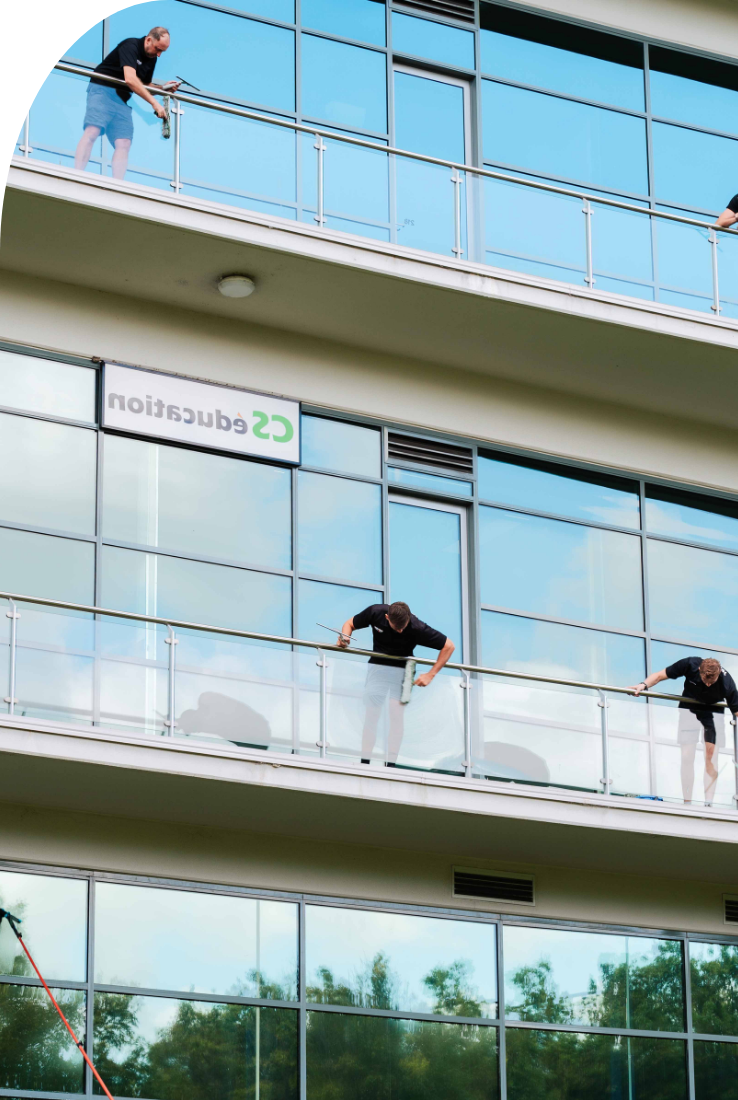

What Does Sydney’s Winter Actually Do to Your Windows and Building Exterior?
Most Sydney property managers and building owners focus their cleaning budgets on the warmer months. That is understandable. But it means winter quietly does its damage unchecked.
From June through August, Sydney buildings are exposed to:
- Salt-laden sea breezes from the Pacific and Harbour that deposit a fine crystalline film on coastal and near-coastal glass.
- Mould and algae growth on rendered walls and concrete surfaces, encouraged by higher humidity and reduced UV exposure.
- Watermark buildup from repeated rain cycles with no drying in between, particularly on north and west-facing facades.
- Exhaust and particulate deposits from heavier CBD traffic during commuter winter hours, settling on ground-level and mid-rise glass.
Left unaddressed going into spring, this buildup does not just look bad. Hard water mineral deposits and salt residue can permanently etch into glass if they sit through repeated heating and cooling cycles. At that point, cleaning will not fix it. Replacement will.
Worth knowing: Glass that is not regularly cleaned and maintained can develop irreversible etching within 12 to 24 months in Sydney’s coastal environment. A professional clean costs a fraction of glass panel replacement.
Why Does Spring in Sydney Create a Second Wave of Grime on Freshly Cleaned Surfaces?
Even if you managed a winter clean, Sydney’s spring environment starts a new assault on your surfaces almost immediately.
September and October bring two specific challenges that are often underestimated:
Pollen from Sydney’s native trees
Sydney’s spring season triggers mass pollen release from species including Sydney Blue Gum, Couch Grass, Ryegrass, and Plane trees. This pollen is not just a health issue for allergy sufferers. It coats glass surfaces with a yellow-green film that streaks badly in light rain and becomes sticky and difficult to remove if allowed to dry in summer heat.
Westerly dust from inland NSW
Spring in Sydney frequently brings strong westerly winds carrying fine red dust from western NSW and Queensland. This dust settles on any flat or semi-flat surface, including glass, concrete, and rendered walls. It is fine enough to work into microscopic surface imperfections and significantly harder to shift than standard urban particulate matter.
The combination of winter residue plus spring pollen plus westerly dust creates a layered contamination problem that a standard rinse will not address. It requires professional-grade equipment, the right chemical solutions, and trained technicians who know how to treat each surface type correctly.
This is exactly what Shimmer’s commercial window cleaning service is built for.
When Is the Right Moment in Spring to Schedule Your Professional Clean?
Timing your spring clean matters more than most people realise. Book too early (September) and you will likely need a follow-up as the main pollen season peaks. Book too late (late November) and you are competing with summer bookings, your preferred technician timeslots fill up, and the heat is already making conditions less ideal for cleaning solutions.
The sweet spot for Sydney is mid-October to early November. By this point:
- The bulk of spring pollen has already settled and can be cleared in one service.
- Temperatures are warm enough for fast drying but not yet at the extreme heat levels of December and January where cleaning solutions can streak if they dry too fast.
- Daylight hours are longer, giving technicians more working time per day without additional lighting.
- There is still time for a quick secondary touch-up before the Christmas and summer holiday period if needed.
For strata managers and facilities teams managing multiple sites, getting bookings locked in now means consistent scheduling across your portfolio before Q4 gets crowded.
Which Surfaces Should Be Included in a Spring Building Clean?
A professional spring clean is not just about windows. To genuinely protect your building and maintain its appearance heading into summer, multiple surface types need attention simultaneously. Treating them together is significantly more cost-effective than reactive, one-surface-at-a-time service calls.
External Glass
Frames, seals, sills and glazing panels. Pollen and watermarks cleared streak-free.
Building Facades
Rendered walls, brick and cladding. Mould, algae and winter staining removed safely.
Pressure Cleaning
Driveways, paths, concrete and car parks. Algae and grime lifted before summer foot traffic peaks.
Roof Surfaces
Moss and lichen growth addressed before spring rain turns it into a slip hazard.
Solar Panels
A dirty panel loses significant output. Spring is the ideal pre-summer efficiency reset.
Soft Washing
Low-pressure treatment for sensitive surfaces like render, heritage stone and painted exteriors.
Shimmer Glass and Pressure Cleaning offers all of these as a coordinated service. View the full range of services, including soft washing for sensitive building surfaces and residential window cleaning for Sydney homeowners.
How Should Facilities Managers and Strata Teams Plan Their Spring Cleaning Schedule?
For facilities managers, strata committees, and property management firms overseeing multiple sites, spring is not just a maintenance window. It is a compliance and asset protection window. Getting the schedule right protects long-term asset value and keeps your buildings audit-ready heading into Q4.
Here is how high-performing facilities teams approach it:
- Consolidate across your portfolio: Coordinating a single contractor across multiple buildings reduces administrative overhead, aligns scheduling, and typically unlocks volume pricing. A reactive, per-building approach costs more and creates inconsistent outcomes across your portfolio.
- Document the condition baseline: A professional contractor who photographs surfaces before and after each service gives you defensible records for WHS audits, body corporate reporting, and insurance purposes. This is particularly relevant for slip-hazard surfaces like pressure-cleaned paths and wet-area glass.
- Align spring cleans with lease renewals and inspections: Buildings heading into end-of-lease inspections or new tenant commencement in November and December benefit significantly from a pre-inspection spring clean. It reduces defect claims and positions the asset well for incoming occupants.
- Build a maintenance cadence, not a one-off: The most cost-effective approach is a scheduled annual or bi-annual program. Spring sets the baseline; an autumn follow-up addresses summer buildup. Shimmer works with strata and commercial clients to build recurring service programs with fixed scheduling across multiple sites.
- ISO-certified contractor assurance: Shimmer Glass and Pressure Cleaning holds ISO certification. For government, defence, and enterprise facilities teams, this is a compliance prerequisite. Confirm contractor credentials before committing to a spring program.
Shimmer’s commercial team manages multi-site cleaning programs across Sydney for strata, government, retail, and enterprise facilities. Contact them to discuss a tailored spring program for your portfolio.
Frequently Asked Questions
Book Your Spring Building Clean Before Q4 Fills Up
Spring slots for commercial and strata buildings fill fast. Speak to Shimmer’s team now to lock in your schedule across your entire portfolio before the summer rush.
Get a Free Quote No obligation. Fast turnaround. Contact the team today.