4.9 Stars | 270+ Reviews
4.9 Stars | 270+ Reviews
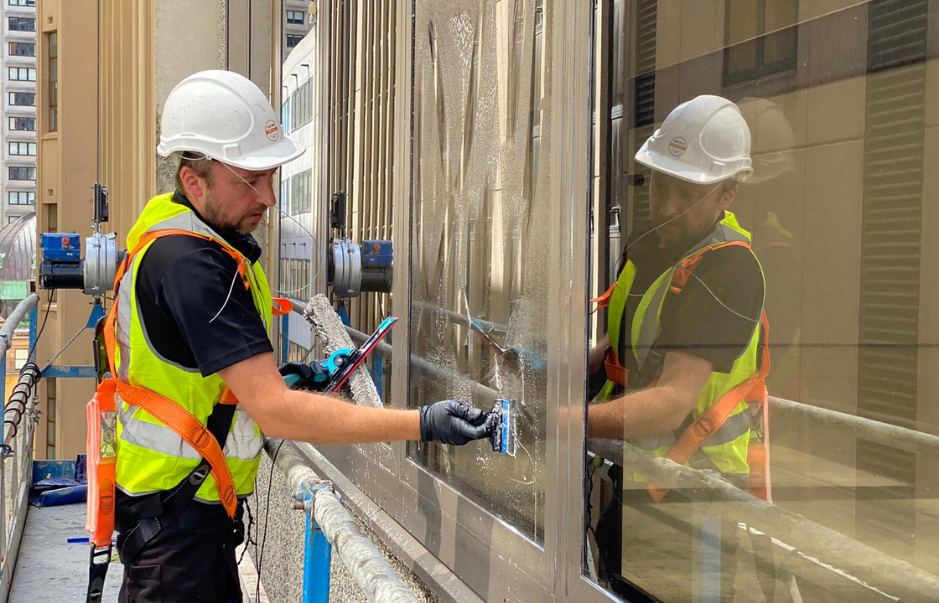
A facade that looks immaculate from the street can hide a difficult access problem for the team cleaning it. BMU vs rope access window cleaning is the first decision facility managers face on a new high-rise contract.
This guide compares BMU and rope access window cleaning directly. It covers how each method works, where each one struggles, and how NSW compliance requirements apply to both. By the end, you should be able to assess your own building against the right access method.
A Building Maintenance Unit, or BMU, is a permanent access system fixed to a high-rise building’s roof. It typically includes a jib arm, cradle and powered hoist that travels along a perimeter track. Once installed, a BMU gives technicians a stable platform to clean windows and facade panels at height. No external scaffolding or rope rigging is required for each clean.
BMUs suit buildings with regular cleaning cycles. Commercial towers in the Sydney CBD often need quarterly or monthly maintenance and rely on this system. The unit is built in at construction stage, or retrofitted to an existing building later. Ongoing certification under AS 1418.13 sits with the building owner, not the cleaning contractor. As a result, BMU access carries higher upfront capital cost but lower per clean labour cost over time.
Certain building shapes limit what a BMU can reach. Sloped facades, setbacks, recessed balconies and complex architectural features can create blind spots for a track mounted cradle.
Tip from the professionals: ask your BMU supplier for a facade coverage map before signing. Many Sydney towers with irregular facades pair a BMU with rope access technicians for this reason, using both methods together to cover the sections the machine cannot service.
Rope access window cleaning uses IRATA certified technicians working from ropes anchored to the building structure. Technicians descend the facade on a main line and an independent safety line. Each line is secured to a separate anchor point. This method gives access to almost any point on a building’s exterior, regardless of facade shape or setback design.
Rope access does not depend on fixed machinery, so it works well on buildings without a BMU. It also suits sections a BMU cannot reach. Setup and pack down are faster than mechanical systems. This makes rope access well suited to one-off cleans, sectional work or buildings under 15 storeys. Technicians must hold current IRATA certification. Level 1 is the minimum standard for line work on a Shimmer job.
Rope access has practical limits too. Strong wind, storms and low visibility can halt work for the day. Very tall buildings may need longer rope runs and additional anchor checks before descent. Anchor points must be installed, tested and certified before any technician clips in. This requirement sits alongside the building’s other height safety infrastructure.
Related reading: see our guide to high-rise window cleaning in Sydney for a broader look at building thresholds and how access methods are chosen at that scale.
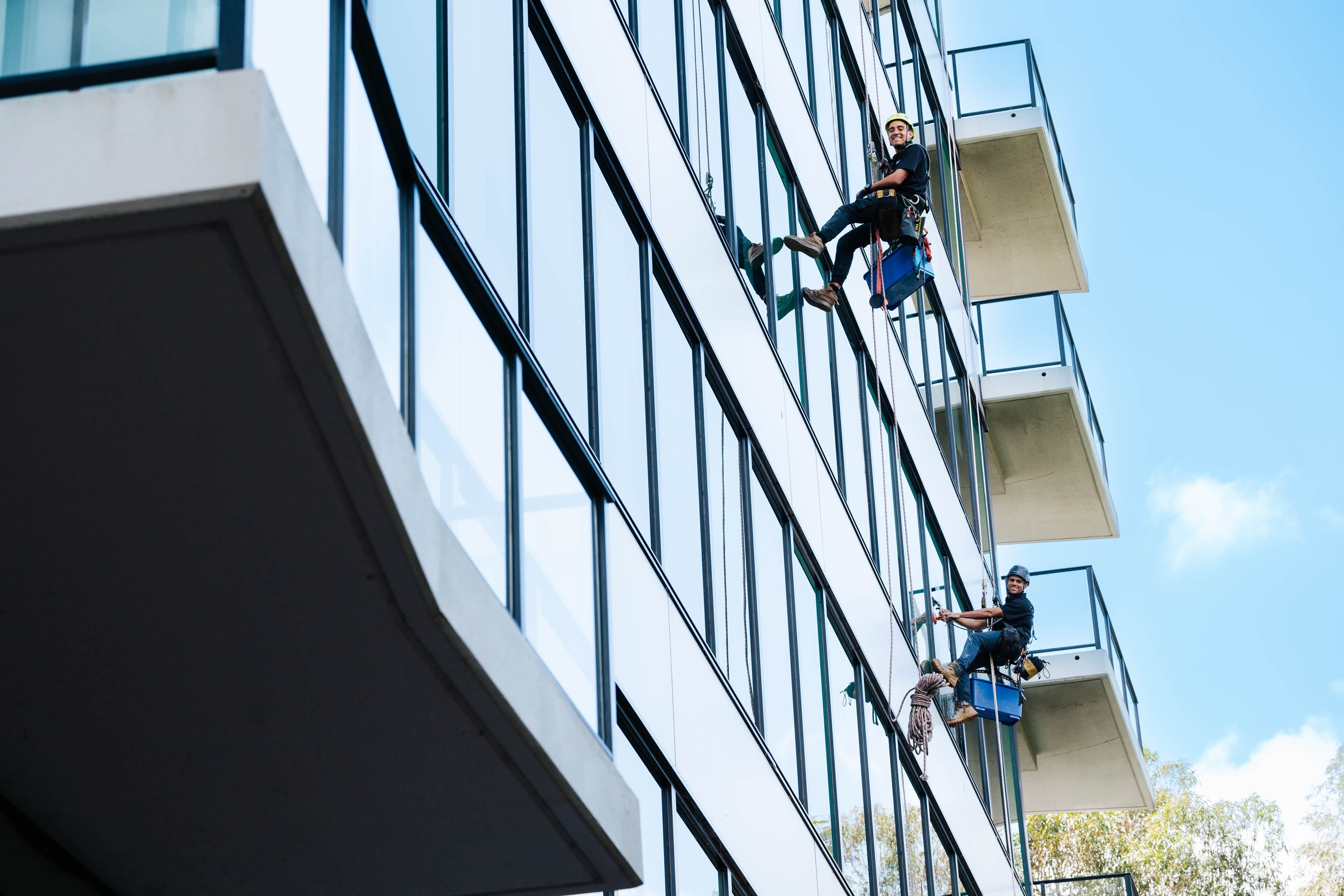
Both methods deliver an immaculate finish when carried out by a qualified team. The table below sets out where each one differs in practice.
| Factor | BMU | Rope Access |
|---|---|---|
| Facade coverage | Fixed track; may miss complex features | Reaches almost any exterior point |
| Setup time | Ready once deployed | Requires anchor checks and rigging each session |
| Cost structure | Higher capital cost, lower per clean labour cost | Lower capital cost, higher per session labour cost |
| Weather sensitivity | Slightly wider wind tolerance | Pauses sooner in wind and storms |
| Best suited to | Tall towers built with the system in mind | Irregular facades, lower rise buildings, sections a BMU cannot reach |
Many Sydney high-rise buildings use both methods together. The BMU covers the primary facade, and rope access technicians cover the areas the machine cannot service.
Every high-rise window cleaning job in NSW operates under the Work Health and Safety Act 2011. The hierarchy of controls applies to both access methods under this legislation. A current Safe Work Method Statement is required before work begins on either access method. It must reference the specific building by name.
Rope access technicians must hold current IRATA certification, along with police checks where the building requires them. Anchor points, davit arms and BMU systems must carry current compliance certificates before any technician uses them. Lapsed certification stops work until it is renewed. Shimmer holds triple ISO certification across quality, safety and environmental management, covering both access methods on every job.
Building owners and facility managers share responsibility for this compliance. The building’s permanent height safety infrastructure, including BMUs and anchor points, is the owner’s responsibility to maintain and certify. The cleaning contractor is responsible for technician qualifications, equipment and on-site safety documentation.
Important: for further detail, refer to SafeWork NSW’s Managing the Risk of Falls at Workplaces code of practice.
The right access method is decided by the building, not by preference.
The right method depends on the building’s design, height, cleaning frequency and budget. A tower with a straightforward facade and frequent cleaning needs may justify the capital cost of a BMU. A building with an irregular facade or a lower cleaning frequency is often better served by rope access. The same applies to any building with sections a BMU cannot reach.
For many Sydney buildings, the most practical answer combines both methods. Assess your building’s facade design and existing infrastructure using our BMU and rope access method pages. Factor compliance requirements into the decision before settling on one method or a combined approach.
Shimmer works across both BMU and rope access methods for high-rise buildings throughout Sydney.
Get a Free Quote Or call us: 1300 090 914
Before Summer Hits: When to Schedule Your High-Rise Window and Facade Clean in Sydney | Shimmer Glass TL;DR — Key Takeaways Spring is the optimal window for high-rise access work in Sydney: stable winds, longer daylight hours, and moderate temperatures that prevent solution streaking. Summer heat permanently bakes mineral deposits and salt residue into high-rise […]
Read More Why Spring Is the Best Time to Get Your Windows Professionally Cleaned in Sydney | Shimmer Glass TL;DR — Quick Summary Spring is the single best window for professional window and building cleaning in Sydney. Here is why it matters and what you should do right now: Winter leaves a layer of grime, mould, and […]
Read More Tired of streaky windows? Discover the professional method for streak-free windows every time — from the right tools to the technique the experts use in Sydney.
Read Morecontact Shimmer today
Guaranteed reliable and professional window and glass cleaning service
Experience
Free
Guaranteed
Guaranteed